What The Work Involves
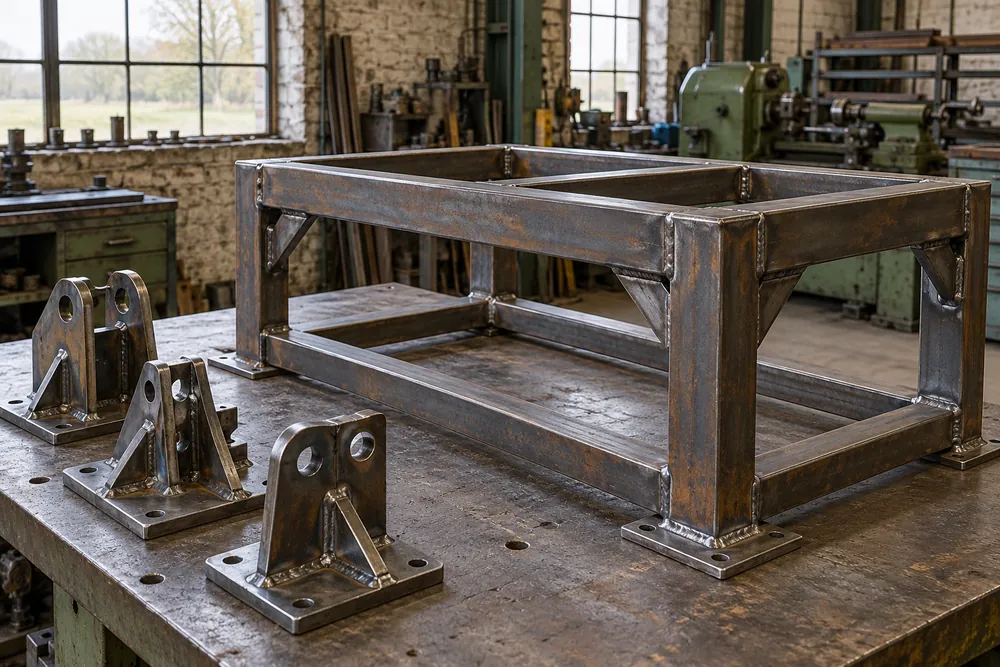
Bespoke steel fabrication starts with a requirement rather than a catalogue item. It can include a mounting frame around existing services, a support assembly for replacement equipment or purpose-made brackets for a commercial refurbishment. The aim is to define a component that fits its duty and its surroundings.
A one-off item still needs controlled information. Dimensions, material, loading, connections and finish should be recorded in an agreed drawing. A detailed conversation is useful, but it cannot substitute for a final reference that everyone involved can check.
We welcome commercial enquiries at both concept and drawing-ready stages. Explain whether you need design development, fabrication only or installation as part of the package. If structural engineering is required, appoint the responsible designer and settle that interface before material is ordered.
When You Need This Service
Bespoke steelwork becomes useful where a standard frame is too wide, a fixing face is offset or equipment needs a support arrangement around existing pipework. It can also help when replacing an obsolete component. The starting point should be the operating requirement, not simply a request to reproduce a damaged part.
For repeat orders, a bespoke first item can become a controlled production component. Keep the drawing revision, sample approval and inspection requirements linked to the order. This reduces uncertainty when a later batch is made for another area of the same facility.
Details Worth Resolving Early
Survey information should distinguish fixed interfaces from dimensions that can change. A slotted hole may help with installation, but it must be permitted by the design rather than added casually. Confirm allowances for coatings, levelling, shimming and access to tighten fixings.
Consider how the item will be transported, lifted and maintained. A single welded assembly may need to become a bolted set of modules to pass through a plant-room doorway. Any change to the joint arrangement should be reviewed for strength, stiffness and installation practicality.
For items near working machinery, tell us about vibration, heat, chemicals and cleaning. These can affect both the material and the connections. If a component must be removable, explain the safe maintenance sequence and identify who approves the equipment modification.
Standards And Project Responsibilities
Bespoke manufacture does not remove the need for a relevant design and execution specification. Load-bearing structural components may fall within BS EN 1090 requirements, depending on their intended use. The engineer should establish the required grade, execution class, connections and inspection scope for those items.
Equipment-related steelwork should be assessed in the context of PUWER and the safe use of the complete machine. Construction installation needs the appropriate planning under CDM 2015. The applicable duties depend on the job, so a general description of custom metalwork is not enough to define compliance.
Where welding is specified, the workshop and site method need suitable COSHH controls for fume exposure. Agree any inspection or testing required by the design. Certification, material records and inspection reports should be requested explicitly where they form part of the handover package.
How The Work Is Planned
Describe The Problem
Send the function, site constraints and available drawings. Include photographs without relying on them for critical dimensions or structural assessment.
Develop The Detail
Agree the design responsibility, survey information and fixing arrangement. Resolve access, maintenance and finish before releasing an approved drawing.
Build The Item
Material preparation, assembly and welding follow the agreed details. For a repeat component, discuss first-article checks before making the full batch.
Confirm The Fit
Check dimensions and agreed interfaces before delivery. Installation and handover records should match the scope and acceptance requirements written into the order.
What Goes Into A Steelwork Quote
Bespoke steel fabrication cost depends on design development, material selection, the number of operations and how much set-up a one-off needs. Survey work and trial fitting may be sensible where an existing installation has uncertain dimensions. Price those tasks openly rather than hiding them in a manufacturing allowance.
Protective coatings, delivery restrictions and site fitting can also change the quotation. A simple sketch without loads or fixing details is unlikely to support a firm price. Provide the best available information, identify what remains undecided and ask for assumptions to be listed so the scope can be refined.
Your Questions Answered
Can Bespoke Steelwork Start From A Sketch?
Bespoke steelwork can start from a sketch when it clearly shows the intended function and approximate geometry. It is a discussion tool rather than approval for manufacture. Critical dimensions, material, loads, fixings and finish still need to be confirmed in a controlled drawing, with engineering input where the duty requires it.
Can You Make Repeat Bespoke Components?
Repeat bespoke components can be quoted against an approved drawing and a stated quantity. Include the revision, material, finish and acceptance criteria so later orders match the first item. If fit or appearance is important, agree a first-article inspection or sample approval before the remaining batch is released for manufacture.