What The Work Involves
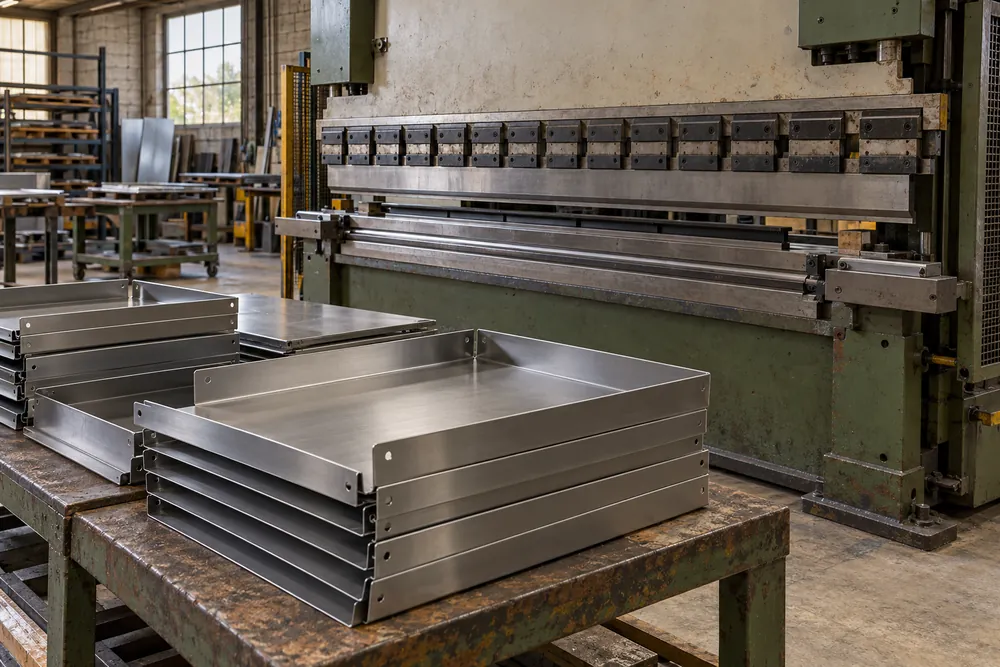
Sheet metal fabrication produces parts from flat material through cutting, punching, bending and joining. The result might be a service cover, an equipment tray, a folded channel or an enclosure panel. Material thickness, bend geometry and fixing details need to be considered together rather than specified in isolation.
Commercial buyers often arrive with a drawing of the finished shape but no developed flat pattern. That is a useful starting point. The production drawing still needs the correct bend allowances, tooling approach and assembly references before material is cut.
We welcome enquiries for mild steel, stainless steel and aluminium sheet components where the intended use and finish are clear. Tell us if the part will be visible, exposed to weather, cleaned regularly or installed near electrical equipment. These conditions affect the material, joints, edges and acceptance checks.
When You Need This Service
Sheet metal suits components where a formed profile can provide the required stiffness without the weight of a solid block or heavy frame. Folded edges can improve a panel’s rigidity and remove exposed sharp edges. The appropriate thickness still depends on span, support conditions and loading.
Typical enquiries include removable machinery covers, folded drip trays, service-access panels and backing plates for commercial installations. If the component provides guarding, containment or environmental protection, describe that duty explicitly. A neatly folded box is not automatically suitable for a safety-critical or weather-rated application.
Details Worth Resolving Early
Bend radius, hole distance from a bend and flange length influence whether a part can be formed as drawn. Features placed too close to a bend may distort or prevent tooling access. A drawing review can identify where a small geometry change would make manufacture more practical.
Specify the finished dimensions and identify whether they refer to the inside or outside faces. Include corner details, seams, visible surfaces and the intended fixing method. For mating panels, an assembly drawing is often more useful than disconnected sketches of individual parts.
Stainless steel appearance needs particular care when grain direction and exposed faces matter. Protective film, deburring and handling requirements should be agreed. If a finish sample is required for approval, include that stage in the order rather than leaving appearance to a subjective inspection at delivery.
Standards And Project Responsibilities
Machine covers and guards need an assessment of the complete equipment and its use under PUWER. Fixing security, access to hazardous movement and maintenance procedures matter alongside the sheet metal itself. Confirm whether a competent machinery specialist needs to approve the arrangement before fabrication.
If sheet components form part of construction work, the project team should identify the relevant design and installation duties under CDM 2015. Structural sheet components may need a defined execution specification. Do not apply a structural conformity label to every non-structural panel or enclosure.
Welded sheet assemblies need suitable fume controls under COSHH. Where the product has a separate performance requirement, such as an ingress protection rating, food-contact duty or fire performance, state it at enquiry stage. Those claims need appropriate design evidence or testing rather than an assumption based on the metal chosen.
How The Work Is Planned
Review The Part
Send a drawing or dimensioned sketch with material, thickness, quantity and finish. Identify important interfaces and whether a matching component is available.
Resolve The Folds
Agree bend directions, radii, seam details and tolerances. Review any changes needed for tooling clearance and check the approved drawing revision.
Cut And Form
The sheet is profiled and formed using the agreed process. Deburring, joining and inserts are included where specified in the fabrication scope.
Check The Assembly
Inspect dimensions, hole locations, edges and appearance. For a repeat batch, agree whether a first article needs approval before the remaining parts are produced.
What Goes Into A Steelwork Quote
Sheet metal fabrication cost is affected by material yield, thickness, profile complexity and the number of forming operations. Welding and dressing corners add labour, while inserts and special tooling create separate operations. A repeat batch may reduce set-up cost per part without changing the material requirement.
Provide the required finish, packaging and delivery arrangement when seeking comparable quotations. Panels with cosmetic faces may need different handling from concealed brackets. Changes after cutting can require new blanks, so settle the important dimensions and drawing revision before production is authorised.
Your Questions Answered
Do You Need A CAD File For Sheet Metal?
A CAD file helps with sheet metal fabrication, but a clear dimensioned drawing can be enough to start the discussion. Include thickness, material, bend directions and the dimensions that control fit. Manufacturing files should be reviewed against the approved finished-part drawing before production, particularly when a flat pattern has been supplied.
Can Sheet Metal Enclosures Be Weatherproof?
A sheet metal enclosure can be designed for weather exposure, but weatherproof performance depends on seams, seals, fixings and openings as well as material. If a defined ingress protection rating is needed, state it before quoting. The completed enclosure needs the appropriate evidence or testing before that rating can be claimed.